
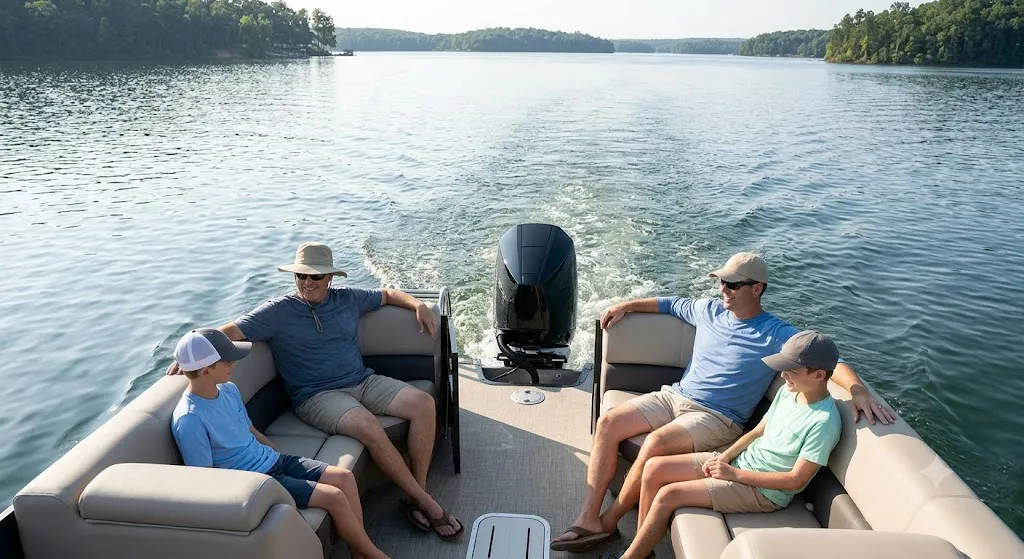
A pontoon boat is the friendly face of the water: wide, stable, and perfect for relaxed afternoons with family and friends. Yet its flat, heavy build asks a lot from the engine behind it. While scanning outboard motors for sale, keep these pontoon-specific points in mind so your first season feels smooth, comfortable, and free of unpleasant surprises.
Why Pontoons Need Different Thinking
Unlike a sleek V-hull, a pontoon pushes two or three large tubes through the water. That design brings excellent stability but also noticeable drag, especially when the deck is full of passengers, coolers, and a lazy dog.
Because of this, engine choice leans toward torque and steady pushing power rather than headline top speed. A motor that feels sprightly on a light fishing skiff may feel breathless on a loaded pontoon cruising along a wide lake.
Reading the Manufacturer’s Rating
Every pontoon has a maximum recommended output, usually on a plate near the rear rail. Treat that number as your boundary, and aim for the upper half of the range if you often carry a full crowd on board.
Staying in that upper half gives you reserve when wind, waves, or extra passengers show up. Choosing at the bottom of the range may look economical at the register but frustrating once the boat is actually loaded. Ask your dealer what range owners of similar boats typically choose.
The Role of Tube Count
Twin-tube pontoons are lighter and more economical, while triple-tube versions add lift, stability, and speed potential. The extra tube changes how the boat handles, and it can justify a more powerful engine for water sports or rougher lakes. Larger lakes in particular reward the extra stability a third tube provides.
Ask what your boat was designed for and match the engine to that intent. A leisurely sunset cruise and a lively tubing session are two very different jobs, and each rewards a thoughtful power decision.
Looking at a Trusted Mid-Range Option
Plenty of pontoon owners settle on a Mercury outboard in the mid-range because it balances smooth low-speed manners with strong acceleration. That blend suits slow dock departures and open stretches where you want to reach a quiet cove quickly.
Always check the recommended propeller options for pontoons. A properly pitched prop makes the same engine feel dramatically better, particularly with heavy loads, and it can reduce fuel burn on long relaxed days. Ask the dealer to demonstrate the exact setup you plan to buy.
Comfort Features That Matter
Pontoons carry people who are not always sailors, so quiet running and low vibration count. Look for engines that start reliably on the first try, idle smoothly, and avoid rough shaking through the deck at low revs. Comfort is part of power, even if it never shows up on a spec sheet.
Remote controls with easy throttle response make docking less stressful for new captains. A smooth, predictable engine builds confidence quickly, and confident drivers tend to enjoy the boat far more than nervous ones.
Fuel and Range Planning
Pontoons are not known for sipping fuel when pushed hard. Cruising at moderate speed stretches your range dramatically, so decide whether you prefer long, slow days or short, fast ones before you commit to a specific engine.
Large lakes with distant docks make range planning essential. Carry a mental map of fuel stops, and watch your gauge honestly. Running dry on a wide lake with a deck full of guests is nobody’s idea of fun. A fuel plan is part of a good boating plan.
Docking and Low-Speed Control
Most pontoon drama happens at the dock, not on the open lake. A broad, flat boat catches wind like a sail, so responsive low-speed control matters more than many buyers realize before their first windy landing. Follow the manual, and your boat will repay you with years of calm afternoons.
Practice slow approaches in an open area first. Learn how the engine responds when you shift gears, and give yourself plenty of space. Calm, patient handling protects both your boat and your neighbors’ boats.
Conclusion
Pontoon engines often sit idle during the week, so start them regularly, use fresh fuel, and flush after use. Short, frequent attention prevents most common problems that arrive after long periods of sitting.
Keep a simple log of oil changes, filter swaps, and impeller replacements. Following a schedule is easier than guessing, and it keeps the boat ready for the next gathering without any last-minute scrambles.